Comparisons
11 articles
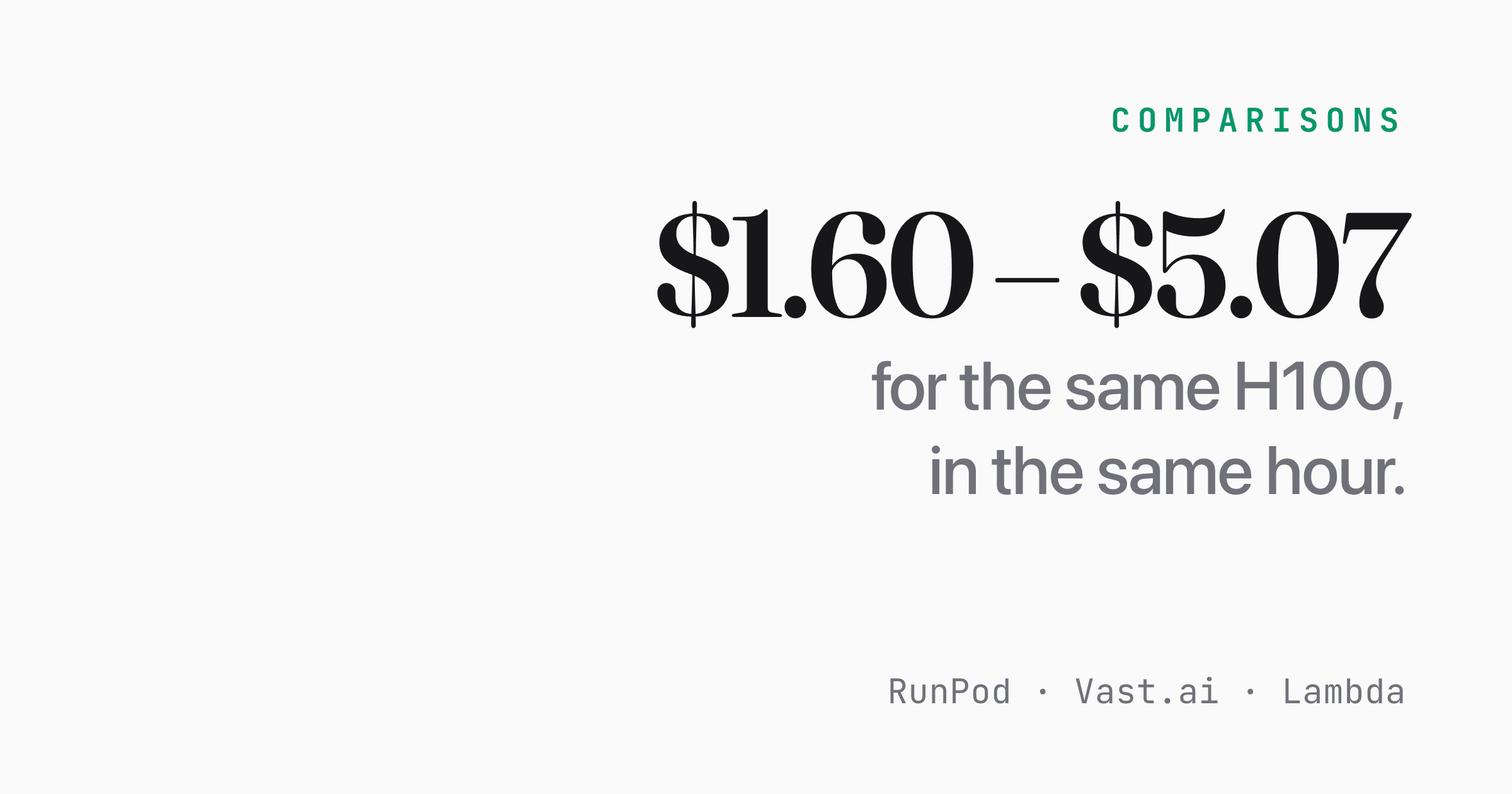
Cloud GPU Pricing Compared: RunPod vs Vast.ai vs Lambda (2026)
The three platforms don't just charge different rates — they sell compute in three different shapes. RunPod posts a flat rate in two tiers, Vast.ai's price is a distribution rather than a number, and Lambda quotes per GPU but sells by the configuration. Here's how that structure decides your bill, plus a July 2026 snapshot and a worked 24-hour H100 example.
Postgres vs SQLite for Small Apps in 2026
In 2026 the SQLite-vs-Postgres question flipped: it's no longer whether SQLite is production-ready, but whether your app actually has the concurrent-write volume that needs Postgres. A pragmatic decision guide with current versions, the single-writer trade-off, 2026 tooling (Litestream, Turso), a real cost table, and a migration trigger based on evidence rather than anticipation.
Pinecone vs pgvector vs Qdrant: Vector Databases Compared
Two axes decide this — where your data already lives, and how much infrastructure you want to run. A structural comparison of pgvector, Pinecone, and Qdrant, including why Pinecone never used HNSW, why two 2026 benchmarks disagree by 1.6–3x under identical stated conditions, and what actually separates the three.
The Best Local LLMs You Can Actually Run on 16GB and 32GB RAM (2026)
Local LLMs are free to download, so the real cost is RAM. Here's the arithmetic that decides what fits — about 0.6–0.65 GB per billion parameters, plus overhead, plus the KV cache — and a spec-checked shortlist of models that clear the 16GB and 32GB bars.
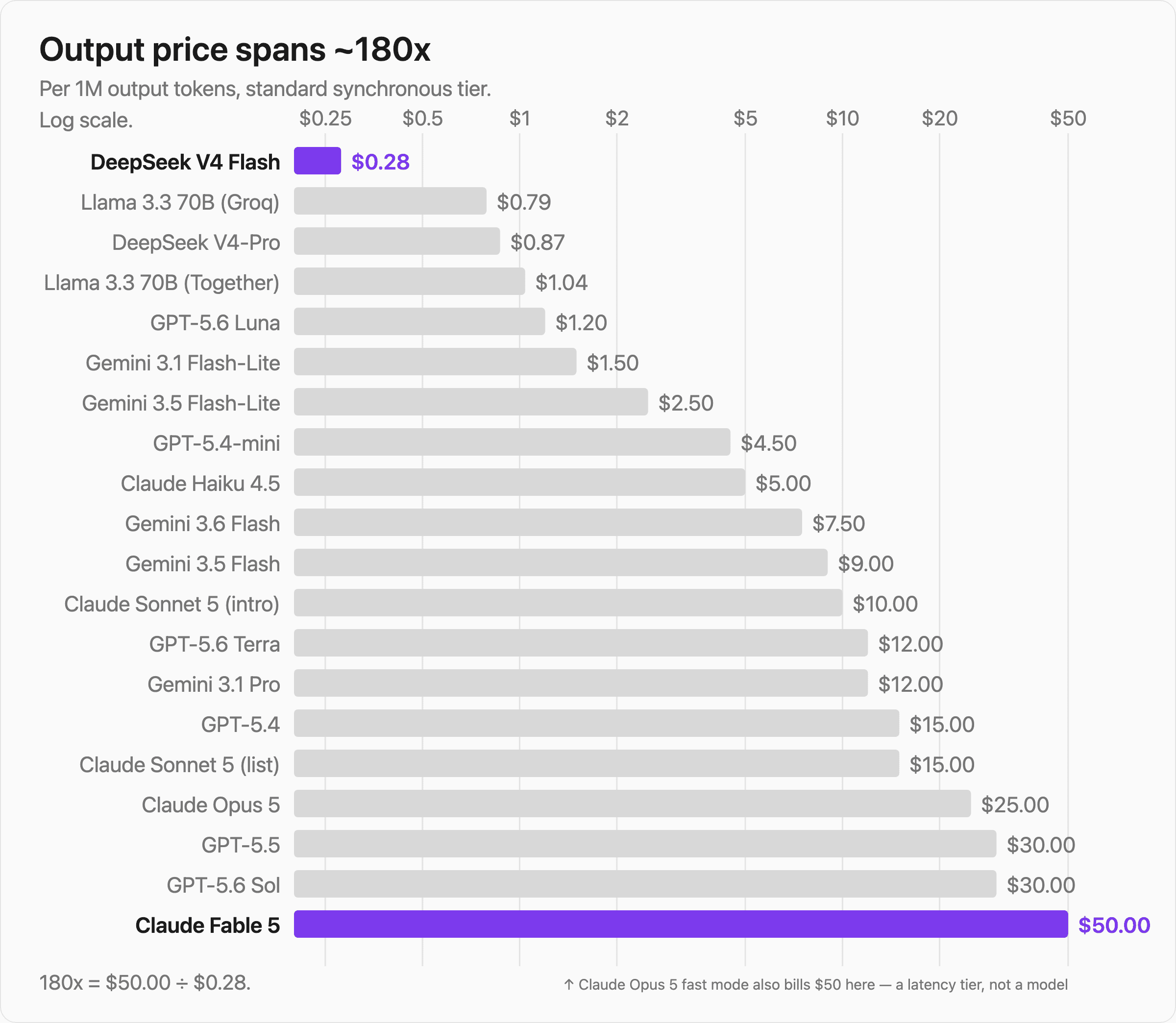
LLM API Pricing Compared: GPT vs Claude vs Gemini vs Open Models (2026)
A vendor-neutral 2026 guide to what actually decides your LLM bill: output rates, not headline input prices, and the five levers — caching, batch, length tiers, service tiers, and prompt design — that move the invoice more than switching vendors. Ends with a dated price snapshot, a worked cost example, and a pick-by-use-case verdict.

Ollama vs LM Studio vs llama.cpp: The Best Way to Run LLMs Locally
Ollama, LM Studio, and llama.cpp aren't really rivals — two of them wrap the third, so token speed is nearly identical. The real choice is interface and control. Here's a side-by-side comparison and a clear pick for each kind of user.

Claude vs ChatGPT vs Gemini for Coding in 2026
By mid-2026 all three frontier models write good code — the real choice is workflow fit, not raw capability. This vendor-neutral comparison pins exact 2026 versions, prices, and benchmarks for Claude Opus 4.8, GPT-5.5, and Gemini 3.1 Pro, then gives a clear 'pick X if you're Y' verdict with the benchmark-contamination caveat built in.
Is GitHub Copilot Worth It in 2026? (vs the Free Alternatives)
GitHub Copilot's June 1, 2026 switch to token-metered AI Credits changed what your $10 buys. A 2026 re-evaluation of Copilot's paid and free tiers against Continue.dev, Cline, Aider, Windsurf, Cursor, and Tabnine — plus why Gemini's free tier is now dead — with a clear pick-for-whom verdict.

Ollama vs vLLM vs LM Studio: Local LLM Runtimes in 2026
Ollama, vLLM, and LM Studio aren't really competitors — they live on different layers of the local LLM stack. The choice comes down to one number: how many requests hit your model at once. Here's a decision-first breakdown with the 2026 versions, tradeoffs, and a clear pick for each use case.

Cursor vs GitHub Copilot vs Windsurf: Which AI Coding Tool in 2026?
Windsurf is now Devin Desktop after Cognition's acquisition — here's how the three leading AI coding tools compare in 2026. A verified price-and-feature table for Cursor, GitHub Copilot, and Devin Desktop, plus a clear pick for each kind of developer.
uv vs pip vs Poetry: Python Package Managers in 2026
uv, pip, and Poetry each solve a different problem in 2026. Here is the benchmark-backed case for defaulting to uv on new projects, keeping pip as the universal baseline, and reaching for Poetry when you publish libraries — plus a skimmable decision guide and migration notes.