Three tools, three jobs. If you are starting a Python project in 2026 and trying to pick between uv, pip, and Poetry, the honest answer is that you will probably touch all three at some point — but only one of them deserves to be your default. Speed used to be the whole argument. It isn't anymore.
Standards compliance and how much these tools consolidate into a single binary now matter just as much.
Here is where each one stands.
| Tool | Written in | Scope | Lockfile | Speed tier | Best for | Latest (Jun 2026) |
|---|---|---|---|---|---|---|
| pip | Python | Installer | Experimental pylock.toml |
Baseline | The universal default, CI base images | 26.1 |
| Poetry | Python | Project + dependency manager | poetry.lock (+ pylock.toml export) |
~10x faster than pip | Library authors, declarative workflows | 2.4.1 |
| uv | Rust | All-in-one | Native uv.lock |
10–100x faster than pip | New apps, monorepos, CI speed | 0.11.21 |
pip — the baseline everyone shares
pip ships with CPython, which means it is the one tool you can assume exists everywhere. That alone keeps it relevant no matter how fast the alternatives get. And pip has not stood still. The 26.x line, released through 2026, closed a lot of the gap people used to complain about.
pip 26.1 (April 2026) added two things worth knowing. First, experimental support for reading and installing from standardized pylock.toml lockfiles — the format defined by PEP 751. Second, dependency cooldowns: you can now refuse to install any package version published within the last N days.
Research cited alongside the release found that a 7-day cooldown would have blocked 8 of 10 analyzed supply-chain attacks before they reached users. You set it with --uploaded-prior-to using an ISO 8601 duration. That same release dropped Python 3.9 support, so check your floors before upgrading.
Reach for pip alone when you want the lowest common denominator: a minimal container, a CI base image, a one-off pip install, or teaching someone their first virtualenv.
Poetry — built for people who publish
Poetry's strength has always been the declarative pyproject.toml workflow: dependency groups, a clean resolver, and a poetry publish path to PyPI that library maintainers genuinely like. The 2.x line kept sharpening that niche.
Official Python 3.14 support arrived back in Poetry 2.2.0. Version 2.3.0 added pylock.toml export (through poetry-plugin-export 1.10.0) and flipped the installer.re-resolve default to false. The current release, 2.4.1 (May 9, 2026), is a maintenance follow-up to 2.4.0's resolution-age settings. Poetry can't yet replace poetry.lock with pylock.toml, but it can emit one for tooling that expects the standard format.
The trade-off is unchanged: Poetry resolves and installs noticeably slower than uv, and it is one more thing to install and learn. If you ship libraries and value a mature, opinionated publishing flow, that cost is easy to justify. If you are building an application, it is harder.
uv — the consolidator
uv is a single Rust binary from Astral that swallows the jobs of pip, pip-tools, pipx, pyenv, virtualenv, and twine. It manages Python interpreters, virtual environments, tools, and workspaces, and it ships a uv pip interface that mirrors pip's commands so you can drop it in without relearning anything. The native uv.lock is fast and reproducible.
Licensing is clean: dual MIT/Apache-2.0, free, no paid tier, and no telemetry you can't disable. That matters because of the elephant in the room — OpenAI announced its intent to acquire Astral on March 19, 2026. As of June 2026 the deal has not closed; it's pending regulatory approval, and OpenAI and Astral are still operating as separate companies.
The permissive license is the real insurance here: anyone can freeze the source at any commit and keep going, regardless of who ends up owning the company.
The speed gap, with caveats
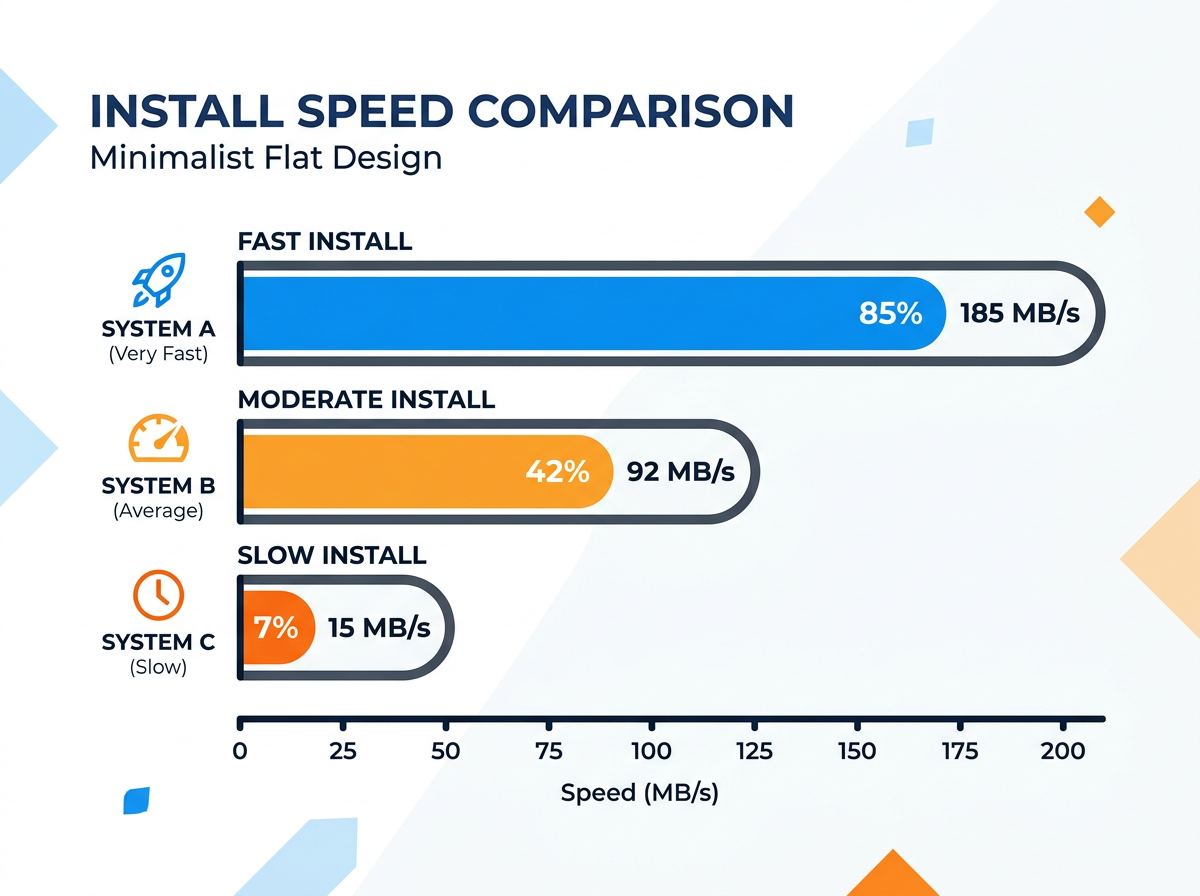
The numbers are large and consistent across independent 2026 write-ups. Treat them as directional — they shift with your machine, network, and cache state — but the order of magnitude holds.
| Scenario | pip / pip-tools | Poetry | uv |
|---|---|---|---|
| Cold install from a lockfile | ~33s (pip-tools) | ~11s | ~3s |
| Django app install step | ~90s | — | ~8s |
| 23 packages, warm cache | 6.6s | — | 0.12s |
| Django+Celery+Pandas+scikit-learn | baseline | 5–8x slower than uv | 10–20x faster than pip+venv |
The reason uv wins isn't a single trick. It downloads in parallel, overlaps metadata fetching with resolution and disk writes, and keeps a global deduplicated cache so the same wheel is never stored twice. On a warm cache the difference stops feeling incremental and starts feeling like a different category of tool.
Standards are converging
All three now revolve around pyproject.toml, and all three touch the standardized pylock.toml lockfile from PEP 751 — pip reads it experimentally, Poetry exports it, uv has its own native lock. The practical upshot: lockfile portability between tools is finally becoming real instead of aspirational. Keep your lockfile in version control no matter which tool you pick.
What to actually use
| Your situation | Pick |
|---|---|
| New project or app, want speed and one tool | uv |
| Need the universal baseline, minimal CI image, single install | pip |
| Publishing a library, want a mature declarative flow | Poetry (or uv's build backend if you prefer) |
| Mixed shop | uv for apps, keep Poetry for library releases |
Migration is low-risk. uv pip install is a drop-in for pip install, and uv pip compile replaces pip-tools. Moving off Poetry, uv reads your existing pyproject.toml — run uv lock to generate a fresh lockfile. You can mix them: plenty of teams run uv for application dependencies and keep Poetry around purely for publishing.
Default to uv, never stop understanding pip, and reach for Poetry when you publish libraries. Re-check the version numbers with --version and the PyPI pages before you commit — this corner of the ecosystem moves fast enough that any article, including this one, ages in months.