By mid-2026 the interesting question stopped being "which model writes better code." All three write good code. Hand Claude Opus 4.8, GPT-5.5, and Gemini 3.1 Pro the same well-scoped function and you'll struggle to tell the outputs apart on quality.
The real decision is about fit — how each one slots into the way you already work, what it costs to run at your volume, and which agentic tooling matches your day.
Here's the short version before the details:
Pick Claude for high-stakes multi-file refactoring, tool use, and computer-use agents. Pick ChatGPT/Codex for terminal-heavy, CI/CD, and intent-driven single-file work where speed matters. Pick Gemini when you need whole-monorepo context, multimodal inputs, or the lowest token bill.
The 2026 comparison at a glance
| Claude (Anthropic) | ChatGPT (OpenAI) | Gemini (Google) | |
|---|---|---|---|
| Flagship coding model | Claude Opus 4.8 (most capable: Fable 5) | GPT-5.5 | Gemini 3.1 Pro (newer: 3.5 Flash) |
| Released | Late May 2026 | Apr 23, 2026 | Feb 19, 2026 |
| API price (per 1M in/out) | $5 / $25 | $5 / $30 | $2 / $4 (≤200K) |
| Context window | 1M | ~1M | 1M (2M on 3.1 Ultra) |
| Headline coding bench | SWE-bench Pro 69.2% (leads); Verified ~88.6% | SWE-bench Verified 88.7%; Terminal-Bench 82.7% (leads) | LiveCodeBench Pro 2,887 Elo (leads); Verified ~76–80% |
| CLI / agent | Claude Code (+ Agent Teams) | Codex / Codex CLI | Gemini CLI → Antigravity |
| Consumer plan | $20/mo (Claude Code) | $20/mo Plus · $200/mo Pro | $19.99/mo AI Pro |
| Best at | Multi-file refactors, tool & computer use | Terminal/agentic, CI/CD, speed | Huge context, multimodal, low price |
All benchmark figures are June 2026 snapshots and move week to week depending on the harness — read the contamination note below before you treat any single percentage as gospel.
Pricing, decoded
There are two prices for every one of these models and they answer different questions.
The API token price is what you pay if you build on them — agents, batch jobs, your own tooling. Gemini is the clear cost leader here: $2 in / $4 out per million tokens up to 200K context, where Claude charges $5/$25 and GPT-5.5 charges $5/$30.
Gemini 3.5 Flash drops further to $1.50/$9 and reportedly beats 3.1 Pro on coding benchmarks, with Flash-Lite down at $0.25/$1.50. If you're running high-volume automated coding, the token math favors Google by a wide margin.
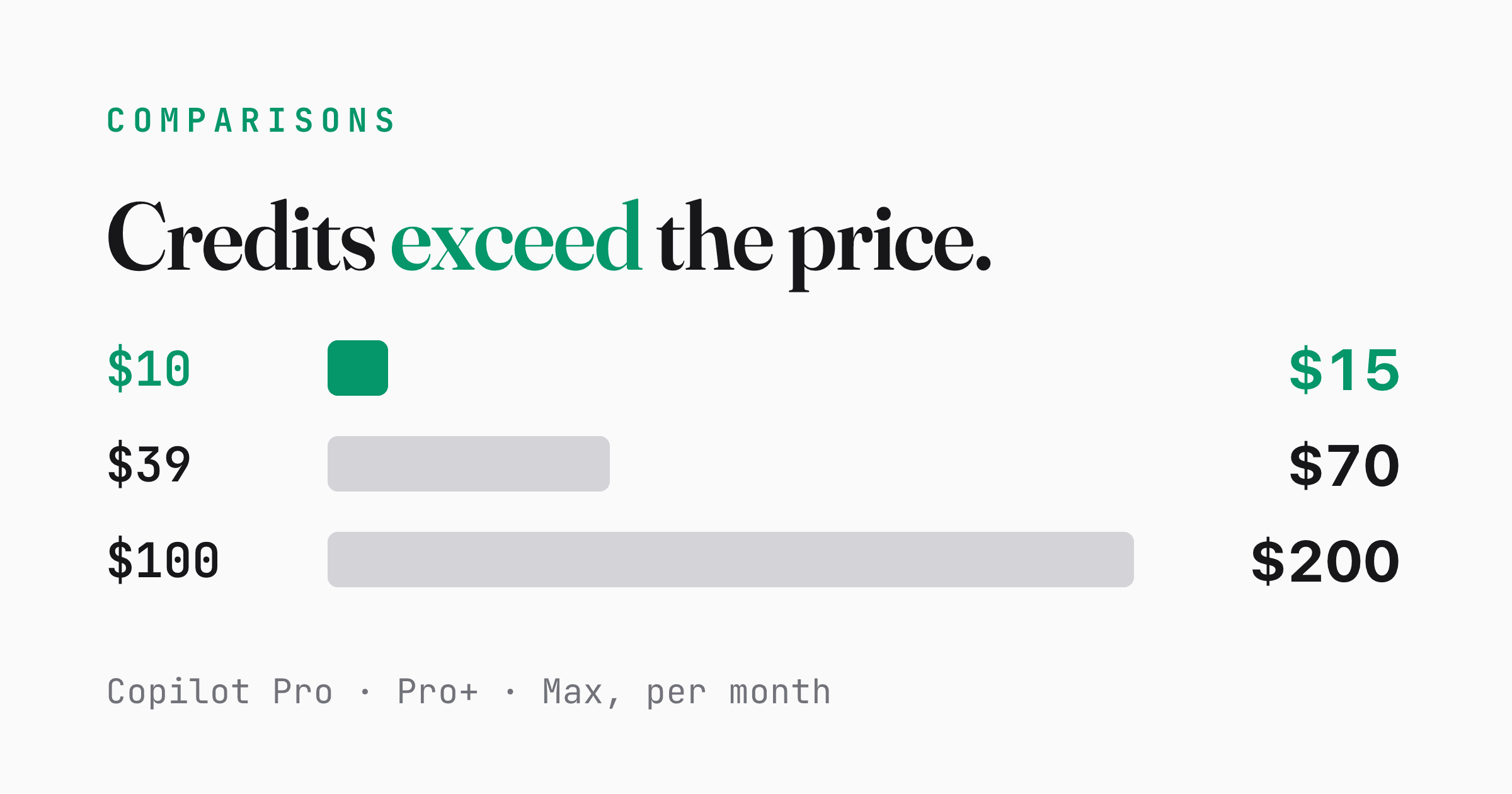
The subscription price is what most individual developers actually pay, and here the three converge almost exactly: Claude Code starts at $20/mo, ChatGPT Plus is $20/mo, Google AI Pro is $19.99/mo. The $200/mo tiers (ChatGPT Pro, and the higher Google Ultra plan) are for people who hit limits on the base tier all day — not most of us.
Don't forget the discounts that change the real bill. Batch processing runs roughly 50% off across all three. Claude's prompt caching can cut input costs up to 90% when you're reusing a large stable context (a codebase, a long system prompt) across many calls — which is exactly the pattern an agent hammering the same repo all afternoon produces.
Raw coding ability — and why the leaderboard lies a little
On the headline numbers, the top of the field is a near-tie. Claude Opus 4.8 lands around 88.6% on SWE-bench Verified; GPT-5.5 around 88.7%. That ~0.1% gap is noise, not a verdict.
Where they separate is on the harder and more specialized boards: Opus 4.8 leads SWE-bench Pro at 69.2%, ahead of both rivals, while GPT-5.5 leads Terminal-Bench 2.0 at 82.7%, the strongest agentic/terminal coding of any general model.
Gemini 3.1 Pro sits lower on SWE-bench Verified (roughly 76–80% depending on the source) but tops LiveCodeBench Pro at 2,887 Elo and led 13 of 16 benchmarks at launch.
Now the honesty note, and it matters. An OpenAI internal audit found benchmark contamination on SWE-bench Verified — several frontier models could reproduce verbatim "gold patch" solutions for tasks whose answers had leaked into training data. So when you see one model "beat" another by a point or two, that's well inside the margin of error and possibly inside the contamination.
Use benchmarks to confirm a model is in the top tier. Don't use them to pick between models that are all already there.
Agentic and CLI tooling — where they actually differ
This is the part that decides your day-to-day, and it's where the three genuinely diverge.
Claude Code added Agent Teams in February 2026 — multiple Claude instances coordinating through a shared task list and a mailbox, which is built for exactly the kind of sprawling multi-file refactor that used to need a human to hold the whole change in their head.
The community read is consistent: Claude is the one people reach for when a change touches a dozen files and the edge cases bite.
Codex got rebuilt in Rust and tops the Terminal-Bench 2.1 CLI leaderboard at 83.4%. It's the terminal king — CI/CD, deployment scripts, infra automation, intent-driven single-file tasks done with fewer tool calls and noticeably faster turnaround. GPT-5.5 in Codex spans Plus, Pro, Business, Enterprise, Edu, and Go tiers, so it scales cleanly from solo dev to org.
Gemini CLI was the generous one — free with roughly 1,000 requests a day — and it's now transitioning to Antigravity CLI. That's the moving piece in this whole comparison: the cutoff for AI Pro/Ultra and free Gemini Code Assist was June 18, 2026, so check the current state before you commit a workflow to it.
Context window and multimodal reach
If your problem is "reason over this entire monorepo in one pass," all three are now in the same league: Gemini offers 1M (and 2M on 3.1 Ultra), Claude offers 1M at standard price with no long-context surcharge, and GPT-5.5 also lands around 1M (≈922K input).
None of them forces you to chunk a genuinely large repo or doc set just to fit it in the window. The catch worth saying out loud: a giant context window helps only when the task actually needs the whole thing in view at once. For most feature work and bug fixes, it doesn't, and you're paying for headroom you won't use.
So context size, once a real dividing line, has largely stopped being one — the differences that remain are about price, multimodal reach, and how cleanly each model uses the context it's given.
On non-code strengths, the split is clean. Gemini is the one to beat for image, PDF, and video-in-the-loop agents. Claude leads on tool use and computer use (OSWorld-Verified 83.4%, MCP-Atlas 82.2%). GPT-5.5 is the strongest single model for "coding plus everything else professional" in one place.
The verdict — which should you pick for whom
- Pick Claude (Opus 4.8 / Fable 5) if you do high-stakes, multi-file refactoring; lean on tool use, MCP, or computer-use agents; or want the most careful handling of edge cases. It's the best default for serious agentic engineering, and it leads SWE-bench Pro.
- Pick ChatGPT / Codex (GPT-5.5) if your work is terminal-heavy — CI/CD, deployment scripts, infra automation, intent-driven single-file tasks — and you value speed and fewer tool calls. It's the agentic/terminal leader and the strongest "one model for coding and everything else."
- Pick Gemini (3.1 Pro / 3.5 Flash) if you need to reason over a whole monorepo at once, work with multimodal inputs, or want the lowest token cost. Gemini is materially cheaper per token, and 3.5 Flash undercuts it further.
For most individual developers the $20/mo tier of any of the three is enough, and the best one is simply the one that fits your existing stack and editor. The cheapest experiment you can run is to put a real task through the free or base tier of two of them before you pay for one.
FAQ
Which is cheapest for coding?
On raw API tokens, Gemini — $2/$4 per million for 3.1 Pro, and $1.50/$9 for the newer 3.5 Flash, well under Claude's $5/$25 and GPT-5.5's $5/$30. On a flat monthly subscription they're effectively tied at around $20. If you're automating at volume, Gemini's token pricing is the deciding factor; if you're a solo dev on a subscription, price isn't the differentiator.
Which has the biggest context window?
Gemini, at 1M tokens on 3.1 Pro and 2M on 3.1 Ultra. Claude also offers 1M at standard pricing, and GPT-5.5 lands around 1M (≈922K input) too — so for normal work, and even for whole-monorepo reasoning, all three have room to spare. Context size is no longer the thing that separates them.
Is Claude or ChatGPT better for refactoring?
Community findings and SWE-bench Pro (where Opus 4.8 leads at 69.2%) point to Claude for complex multi-file refactors, helped by Claude Code's Agent Teams. ChatGPT/Codex tends to win on faster, intent-driven single-file changes and terminal automation. Pick by the shape of your refactor.
Do I need the $200/mo plan?
Almost certainly not. The $200 tiers (ChatGPT Pro, Google Ultra) exist for people who exhaust the base tier's limits all day. Most developers are well served by the ~$20/mo tier — start there and only upgrade if you actually hit the ceiling.
References
- Anthropic — Claude Opus: https://www.anthropic.com/claude/opus
- Claude pricing docs: https://platform.claude.com/docs/en/about-claude/pricing
- OpenAI API pricing: https://openai.com/api/pricing/
- Gemini API pricing: https://ai.google.dev/gemini-api/docs/pricing
- SWE-bench leaderboards: https://www.swebench.com/
- SWE-bench Pro (morphllm): https://www.morphllm.com/swe-bench-pro
- DataCamp — Opus 4.8 vs GPT-5.5: https://www.datacamp.com/blog/claude-opus-4-8-vs-gpt-5-5
- codeant.ai — CLI tool comparison: https://www.codeant.ai/blogs/claude-code-cli-vs-codex-cli-vs-gemini-cli-best-ai-cli-tool-for-developers-in-2025
- eesel — Gemini pricing: https://www.eesel.ai/blog/google-gemini-3-pricing